
Apps de tarjetas por voz, comparadas con honestidad
"Tarjetas de voz" esconde dos promesas distintas: apps que te leen las tarjetas (escucha), y apps que verifican lo que respondes (recuerdo activo en voz alta). La mayoría de las apps solo ofrece una de las dos opciones. Aquí puedes ver qué hace cada una, incluida nuestra app, claramente identificada, para elegir la que mejor encaje con tu forma de estudiar.
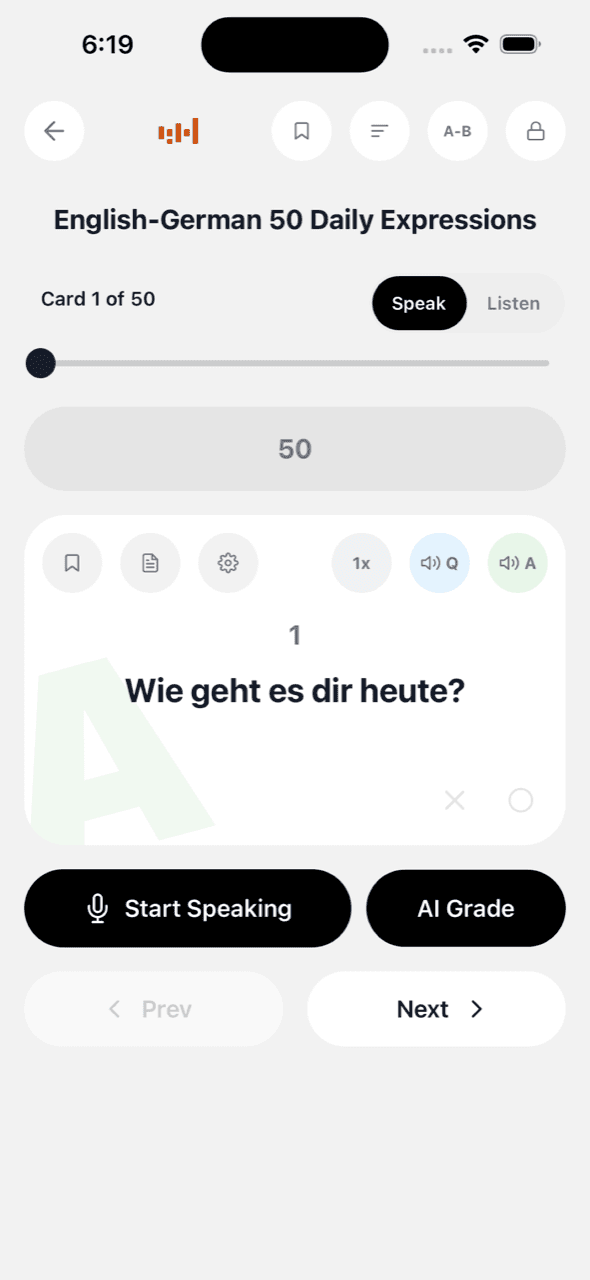
| App | Verifica tu respuesta hablada | Escucha con las manos libres | Creación de tarjetas con IA | Dónde viven las tarjetas |
|---|---|---|---|---|
| VoiceCards (nuestra) | Sí. El STT del dispositivo compara tu respuesta hablada con la respuesta del mazo; la corrección con IA opcional evalúa por significado las respuestas abiertas. | Sí — reproducción automática con TTS con la pantalla apagada, controles en la pantalla de bloqueo, voces por cada lado. | Sí — a partir de un prompt, hasta 10 fotos, o un PDF de hasta 40 MB. | Tu propia hoja de cálculo de Google Sheets en Google Drive, sin ninguna copia en el servidor. |
| Audio Flash | Sí — graba tu respuesta hablada y la evalúa; más de 30 idiomas. | Sí — las preguntas se leen en voz alta vía TTS o archivos de audio. | No es una función central según su sitio. | Mazos dentro de la app. |
| MemTalk | Sí — di la respuesta en voz alta para una verificación instantánea; admite pares de idiomas mixtos. | Sí — repaso centrado en audio. | No es una función central según su ficha. | Mazos dentro de la app. |
| FlashRecall | Parcial — el bucle es escuchar → repetir en voz alta → voltear para autoverificarse; la voz también se usa para crear tarjetas. | Sí. | Creación de tarjetas por voz (dicta el contenido de la tarjeta). | Mazos dentro de la app. |
| Study Cards (Talking Flashcards) | No — orientada a la escucha; las tarjetas se leen en voz alta de forma repetida. | Sí — el TTS del dispositivo lee los mazos de forma repetida. | No. | Mazos dentro de la app. |
| Anki + TTS add-ons | Sin verificación integrada de respuesta hablada; el recuerdo se autocalifica. | Mediante complementos de la comunidad, configuración centrada en escritorio. | Mediante herramientas de terceros que exportan a Anki. | Base de datos de Anki, sincronizada mediante AnkiWeb. |
| Quizlet (funciones de audio) | Sin calificación de respuesta hablada; los modos de estudio son escritos/de opción múltiple. | Reproducción de audio de las tarjetas; no es un bucle con las manos libres en la pantalla de bloqueo. | Funciones de IA en los niveles de pago. | Servidores de Quizlet; biblioteca enorme de mazos compartidos. |
Las filas de la competencia resumen la descripción pública propia de cada app a julio de 2026; las funciones cambian: revisa sus páginas antes de decidir. VoiceCards es nuestra app.
La distinción que de verdad importa
Escuchar tarjetas ayuda a familiarizarte con el contenido y resulta útil en los trayectos y para oír la pronunciación. Pero reconocer algo no equivale a recordarlo: un mazo puede sonarte familiar y aun así puedes quedarte en blanco bajo presión. Si en un examen, una entrevista o una conversación tienes que producir respuestas, te conviene una app que te pida responder primero y compruebe el resultado. Busca reconocimiento de voz que compare la transcripción con la respuesta esperada y, para respuestas abiertas, corrección con IA basada en el significado.
Cómo elegir
Estudias sobre todo en tiempos muertos (trayecto, gimnasio): cualquier app con reproducción sólida con las manos libres funciona: Audio Flash, MemTalk, Study Cards, o el modo Escuchar de VoiceCards con controles en la pantalla de bloqueo. Combínalo con práctica hablada por la noche (el bucle de escucha explica esa combinación).
Te estás preparando para algo hablado (examen oral, entrevista, práctica de idioma hablado): prioriza el recuerdo hablado calificado: VoiceCards, Audio Flash, o MemTalk. Añade calificación por IA a nivel de significado si tus respuestas son frases abiertas en vez de palabras sueltas.
Tu material llega como libros de texto y PDFs: mira la generación con IA. VoiceCards construye mazos a partir de fotos o un PDF de un capítulo en una Google Sheet editable (el método para convertir un capítulo en un mazo); los generadores de terceros también pueden exportar a Anki.
Lo más importante para ti es un planificador SRS consolidado: eso sigue siendo Anki: consulta nuestra propia comparación honesta en VoiceCards vs Anki.
Elige la app según el método de estudio
Para estudiar sin usar las manos, sigue el ciclo de escucha: escucha durante el día, marca las tarjetas difíciles y recuérdalas en voz alta después.
Para exámenes y entrevistas, usa recuerdo activo en voz alta: intenta una respuesta concreta antes de que la app la muestre o evalúe.
Para producir un idioma, crea tarjetas con frases breves mediante traducción por bloques y luego invierte el mazo.
Sigue leyendo
Tarjetas de audio · Métodos de estudio · Plantillas preparadas · Preparación de exámenes